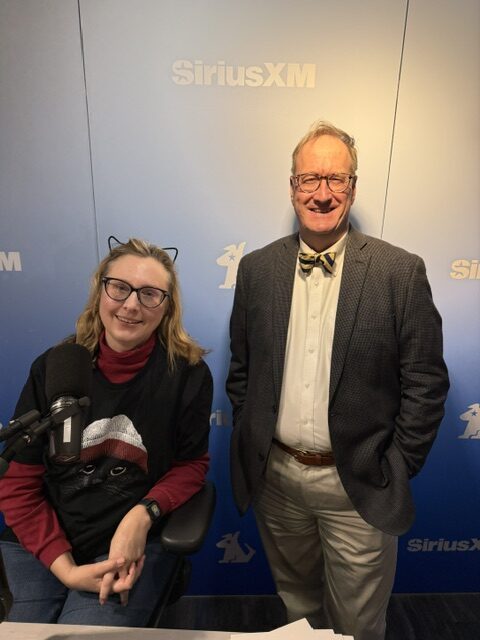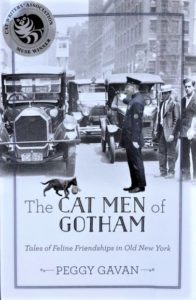
A few months ago, I had the pleasure of being the guest of Carl Raymond on his popular podcast, The Gilded Gentleman. Carl started his podcast in 2021, and it is now at an impressive #21 on Apple’s top history podcasts.

During the hour-long program, I share many of my favorite cat stories of Old New York and answer all of Carl’s questions about the grimalkins who put their paws on New York City during the Gilded Age.

Here is a summary from his website:

Many people are curious about which of the famous Gilded Age families (and even those not on Fifth Avenue) had cats as pets — and the answer may surprise you. Cats nonetheless were a constant in Gilded Age New York and often performed very specific, even professional roles.

Author and unofficial “cat historian” Peggy Gavan joins the Gilded Gentleman table for a look at some of the Gilded Age’s most famous cats from Nicodeemus, who was on show at New York’s first ever cat show in 1895, to Buzzer, America’s most photographed cat (find out why), and several others.|

In addition, Peggy shares that when crucial services benefiting the welfare of cats, such as the ASPCA, other humane societies, and widespread veterinary care, came into being to protect the well-being of our feline friends. 

Click here to go to Episode #130.
If you have never had the opportunity to attend or tune into one my speaking presentations or taken one of my New York City walking tours with Cats About Town, I hope you’ll take some time to join Carl and me as we have some laughs and talk all about cats of the Gilded Age.

And speaking of Cats About Town walking tours, we have some fun news for the 2026 season, including something new for dog lovers:

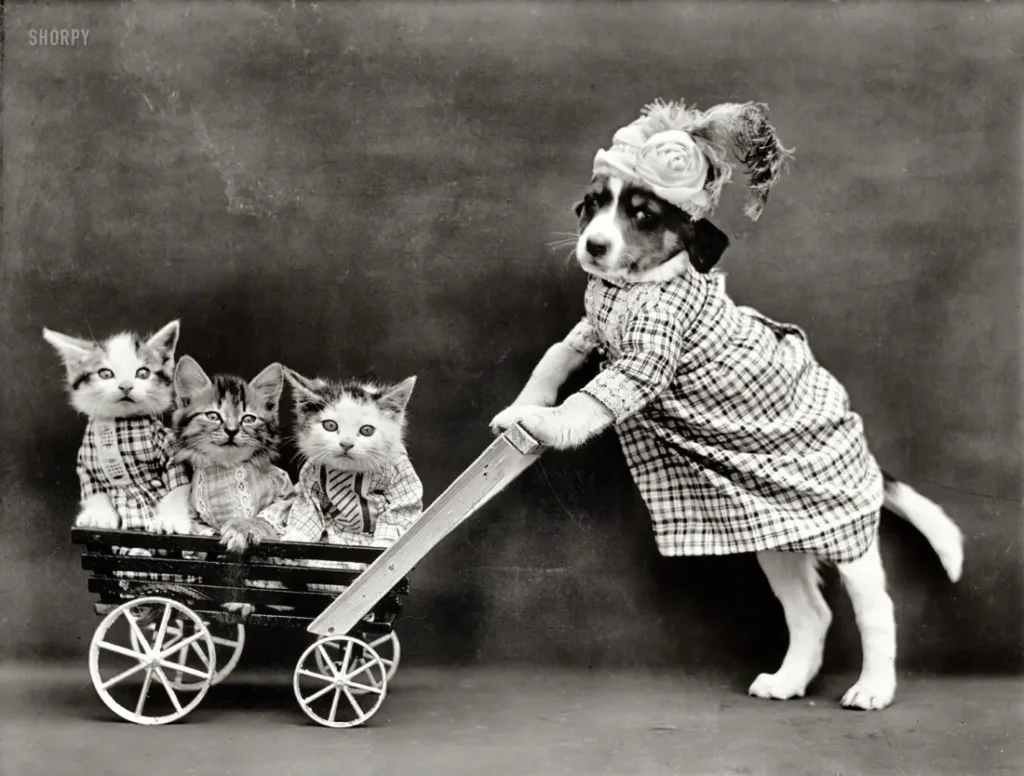
Vintage dog and cats photograph
  • This year we have partnered with Airbnb to make our tours more accessible to out-of-town tourists
  • We have also partnered with several small and independent companies–we call them our Goody Bag Partners–who will be providing lots of kitty-tested-and-approved treats for the goody bags that every guest on our tours receive. Out new partners are:
  • And for those of you who also love or have pet dogs, or who have dog lovers in your life, we’ve added a special tour in Midtown Manhattan that explores the cats AND dogs who lived along Fifth Avenue during the Gilded Age. There are only two of these tours scheduled, so if it sounds like something you’d like to do, reserve your spot now.

Tuxedo cat on a window ledge

When a little black and white kitten fell from a ledge on Fifth Avenue, everyone who witnessed the event placed the blame on the ASPCA and the fire department. We’ll never know who was at fault, but what I want to know is this: Was this in fact a pet cat of Charlotte Augusta Astor?

The story began on November 21, 1894, when a man named J.H. Stetson saw the kitten on a stone lintel above a fourth-floor window at 320 Fifth Avenue, which was owned by Dr. Christopher Bell and his wife Mary. According to servants in this home, the kitten had been there for two days. Dr. Bell said the cat had originally crawled out from a top-floor window at 324 Fifth Avenue and made its way across the lintels to the Bell’s townhouse.

The magnificent home at 324 Fifth Avenue was owned by Charlotte Augusta Astor, the daughter of the late William Backhouse Astor Jr. and Caroline Astor (the notorious Mrs. Astor of The Four Hundred list). Which is why I’d like to think that the cat in this story is a feline Astor (probably just wishful thinking, but it makes for a good story).

Upon seeing the kitten stuck on the ledge, Mr. Stetson called the police, who in turn called the ASPCA. An officer from the ASPCA responded, and he allegedly placed catnip on the lintels to lure the cat into an open window. The catnip did not work, and the officer left the scene without taking any further action.

The following day, someone contacted the fire department about the stuck kitten. Hook and Ladder Company 12 responded, and at the suggestion of Dr. Bell, the men gained access to Ms. Astor’s residence and opened the window on the upper floor (the ledge of this window was apparently at the same level as the lintels on 320 and 322 Fifth Avenue).

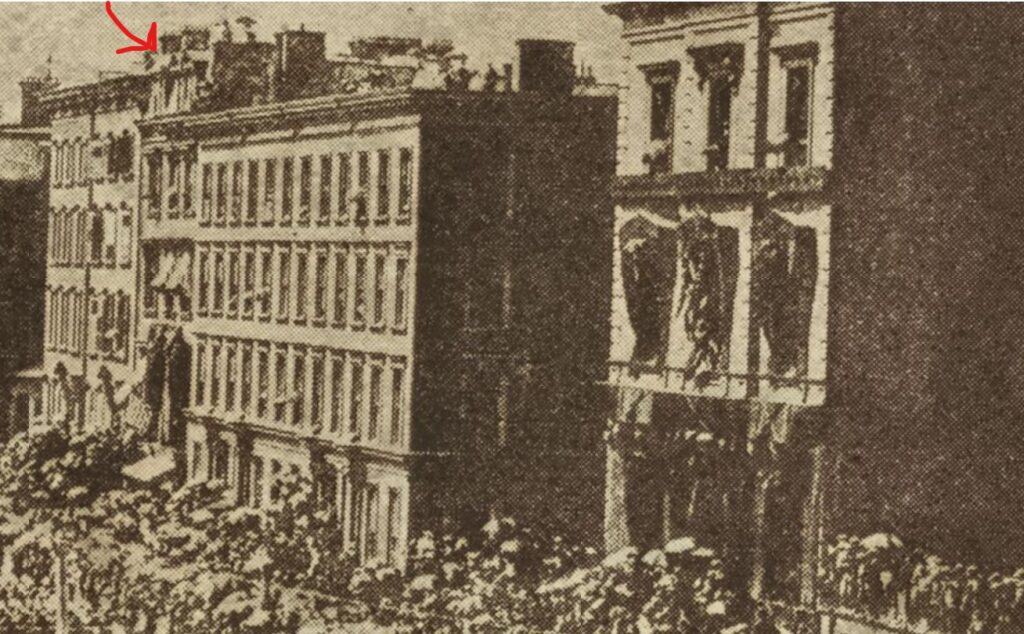
Charlotte Astor's house at 324 Fifth Avenue; the townhomes of Dr. and Mrs. Bell and Mrs. Albert Bierstadt are to the left at 320 and 322 Fifth Avenue. On the far right is the home of John Jacob Astor
The red arrow is pointing to the top floor of Charlotte Astor’s house at 324 Fifth Avenue; the townhomes of Dr. and Mrs. Bell and Mrs. Albert Bierstadt are to the left at 320 and 322 Fifth Avenue. On the far right is the home of John Jacob Astor, which would eventually become the site of the Waldorf-Astoria Hotel and then the Empire State Building.

While the firemen were trying to shoo the kitten toward the open window, the cat jumped across several lintels, making her way from #320 to #322. But before she could reach the Astor home, the cat lost her footing and fell. No one saw what happened to the cat after that–she somehow magically disappeared.

Many people in the crowd who were watching the feline catastrophe blamed the fire department for using a hook to push the cat off the lintel. Accusations started flying all over the place–even the women of the Midnight Band of Mercy got involved, blaming both the ASPCA and FDNY Chief Ed Croker for negligence. Croker told the press that the firemen never brought a hook into the building, and none of the men pushed the cat.

When asked where he thought the cat had gone, Croker said, “It was as if the earth had opened and swallowed her.” He said that one of the women from the Band of Mercy who fed homeless cats said she was ready to rescue the cat, but “no trace of it could be found.” Hopefully she landed on all four feet and scampered quickly away from the crowd.

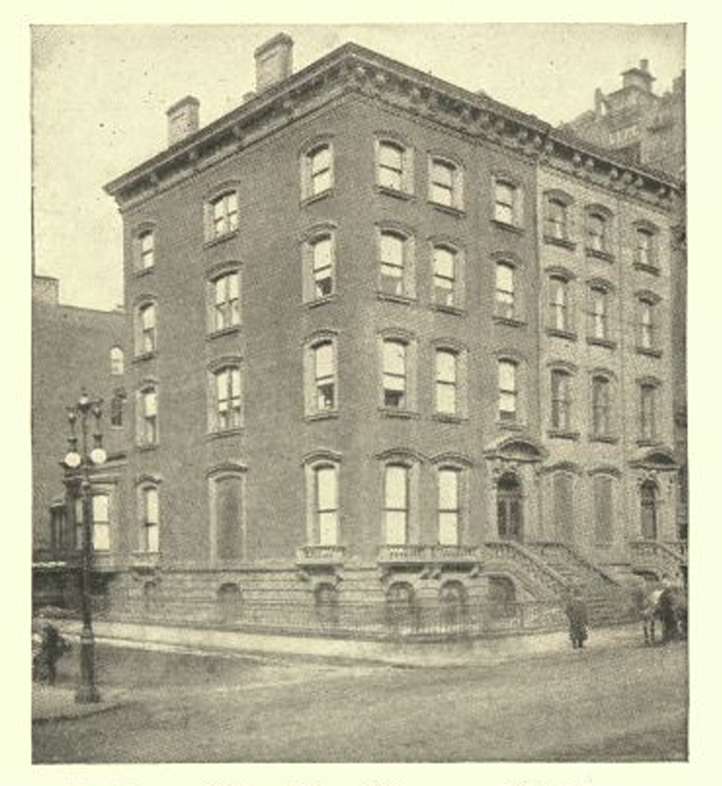
The townhomes of Dr. and Mrs. Bell and Mrs. Albert Bierstadt at 320 (corner building) and 322 Fifth Avenue.
The townhomes of Dr. and Mrs. Bell and Mrs. Albert Bierstadt at 320 (corner building) and 322 Fifth Avenue. The top of Mrs. Astor’s home is just visible at the top right of this photo.

A Brief History of the Bell and Astor Homes

The history surrounding this section of Fifth Avenue where the Astor cat story took place gives us a glimpse into the lives and scandals and “troubles” of the upper class during the Gilded Age.

This block was once owned by the Corporation of the City of New York. In 1799, John Thompson purchased 20 acres of this common land, bounded by about 32nd to 35th Streets and Fifth and Madison Avenues.

In 1825, Isaac Lawrence and his brother Thomas–both prominent merchants with offices on Pearl Street–purchased the land from Thompson (who had run into financial trouble) for $14,000. Two years later, William Backhouse Astor Jr. bought Thomas’ portion of the land for $20,500. And then in 1840, Isaac Lawrence and Astor split Isaac’s portion, each getting 124 building lots. Over the next few years, Lawrence and Astor continued to purchase additional property in this neighborhood.

In 1843, Isaac Lawrence’s lots were sold at auction (reportedly, his son William Beach Lawrence, a once-successful jurist who was married to Hetty Gracie, a daughter of Archibald Gracie of Gracie Mansion, had run up some extensive debts, so Isaac had to sell his property to bail out his son). The soggy lot on the northwest corner of Fifth Avenue and 32nd Street was purchased by T. Putnam for just $600. Putnam later said it was one of the worst purchases he had ever made, believing that even a 700-foot pole would not find bottom on the lot.

Albert Bierstadt
Albert Bierstadt

The next owner of this corner lot was Thomas Rigney, who purchased the land from Putman and built the brownstone townhouse at 320 Fifth Avenue, where the Bells would later live. (It was reported that Rigney’s house never sunk into the ground as Putnam had feared.) Rigney sold the home to Isaac Underhill Coles in 1861.

In 1877, Mary Bell purchased the brownstone home and rear stables at 3 West 32nd Street from the Coles’ heirs for a whopping $80,000. By this time, the house was in a very prestigious residential district of Manhattan, just one block south of the mansions of John and William Astor. Mary got a good deal.

Next door, at 322 Fifth Avenue, was the handsome townhouse of David Stewart, a banker, and his wife Mary. Following David’s death, his widow married artist Albert Bierstadt, a member of the second generation of the Hudson River School. Mr. and Mrs. Bierstadt continued living in the Fifth Avenue home until Albert died in 1902.

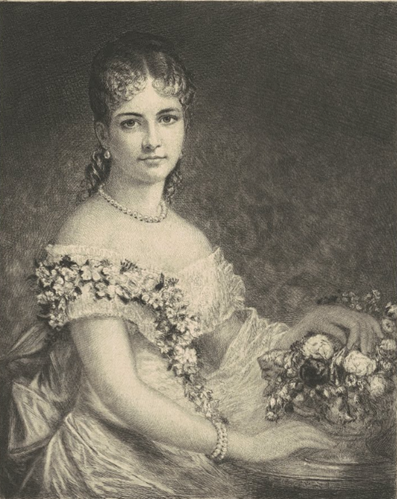
Caroline Augusta Astor Drayton

The most interesting homeowner on this block, at 324 Fifth Avenue, was Mrs. James Coleman Drayton (aka Charlotte Augusta Astor), the daughter of the late William Backhouse and Caroline Astor. Charlotte was only 20 years old and one of the most desirable débutantes of the Gilded Age when she was married to Drayton, a prominent lawyer, in 1879 (the grand wedding took place in the Astor mansion).

The marriage didn’t last long.

In 1890, the Draytons traveled to Europe with hopes of reconciling their differences. But by this time, it was known by all that Charlotte was spending a great deal of her time in London with Major Hallet Alsop Borrowe, an unemployed playboy who lived off his father’s wealth.

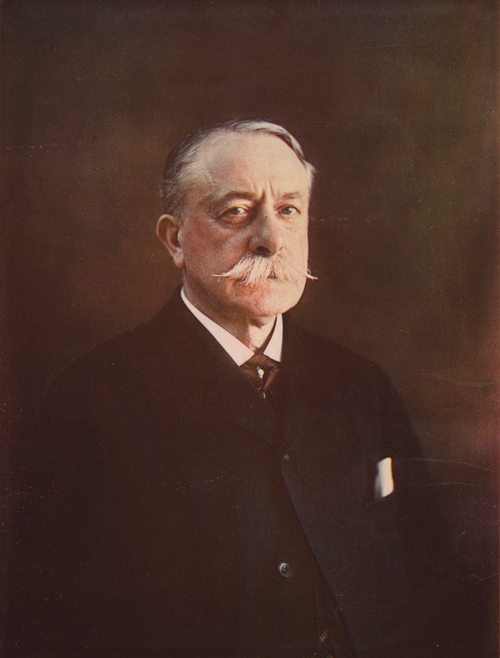
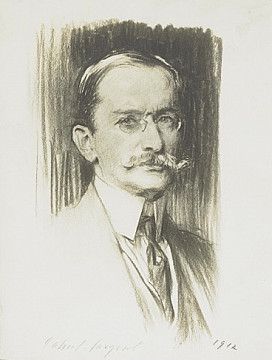
James Coleman Drayton, husband of Charlotte Astor
James Coleman Drayton

The very public affair didn’t go over well with Mr. Drayton or Mr. Astor.

In fact, Drayton challenged Borrowe to a duel; luckily some friends intervened and prevented this from happening. And Mr. Astor disinherited his daughter while leaving $850,000 in trust for her 3 children upon his death that year (her brother, John Jacob Astor IV, gave her $1 million to help her get by). The Draytons divorced in 1896.

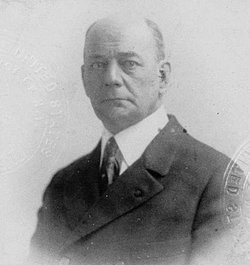
Major Hallet Alsop Borrowe, suitor of Charlotte Astor
Major Hallet Alsop Borrowe

In 1900, the Bell’s 25-year-old son, Denniston M. Bell, was charged with arson for allegedly setting fire to several buildings, including a stable, near the family home in Newport, Rhode Island. Dr. Bell died in 1902, reportedly overcome by the grief his son’s actions and arrest had caused.

By now, the Astor mansions had been replaced with the Waldorf-Astoria Hotel, and many of the brownstone residences in the neighborhood had been converted into lofts or showrooms for business purposes.

Knowing her time had come, Mary Bell purchased the Bierstadt house in 1903 for $400,000, bringing the total value of her land to about $1.25 million. She partnered with developer Henry Corn to construct an 11-story store, loft, and office building on the land that long ago was considered unbuildable.

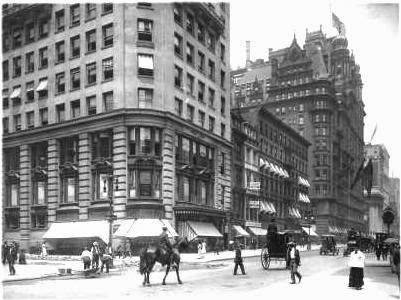
The new Reed & Barton building at 320 Fifth Avenue, about 1905
The new Reed & Barton building at 320 Fifth Avenue, about 1905. The Waldorf-Astoria Hotel is on the right.
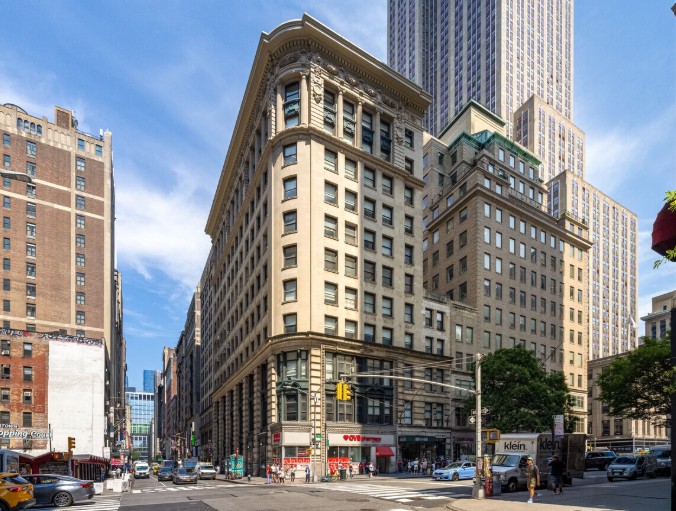
320 Fifth Avenue, 2026
320 Fifth Avenue, 2026. The Empire State Building looms above.

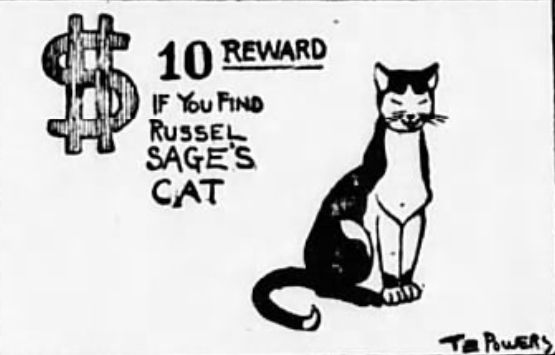
Russell Sage offers $10 reward for missing cat, 1905

New York City financier Russell Sage, aka Uncle Russell, had a reputation on Wall Street as being a spendthrift, a workaholic, and a ruthless money lender without emotion. So when he failed to show up at work after offering a $10 reward for the return of his missing cat, his financial cronies thought he’d gone mad.

“Groups of excited men argued on the curbs of Wall and Broad Streets,” one newspaper noted after Russell announced the reward. “He’s sick,” exclaimed one man. “The market will go to pieces,” another bemoaned.

One news reporter snidely noted that the $10 reward would come from Russell Sage’s $80 million rainy-day fund. Another paper pointed out that finding Russell’s cat would be the only way the average citizen could get hold of his money.

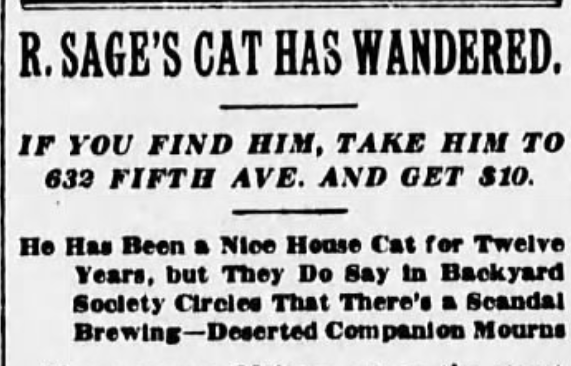
Malta, a large Maltese cat that Russell and his wife, Margaret Olivia Slocum Sage, had owned for 12 years, disappeared from their Fifth Avenue home one day in August 1905. Russell grieved deeply, unable to report to his Nassau Street office as he had done every workday for so many years.

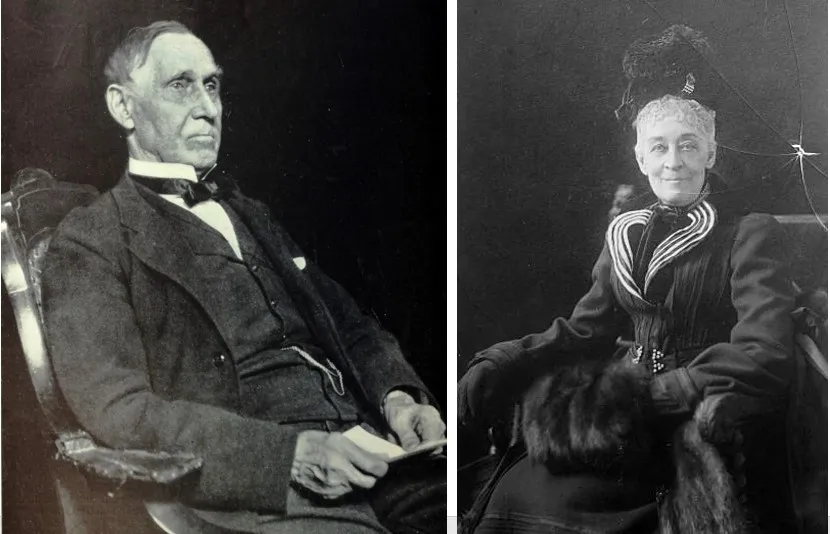
Russell Sage and Margaret Sage
Russell and Margaret Sage

Malto and his sibling Melita were gifted to the Sages by a country friend when they were just kittens. For 12 years they had full run of the house, first in their townhouse at 506 5th Avenue, just north of 42nd Street, and then at 632 Fifth Avenue when the Sages moved into that home in 1903.

Although everyone thought that the cats belonged to Margaret, it was Russell who cared for them the most. In fact, one of the few ways that Uncle Russell Sage de-stressed after a long day of work was to play with his two kitties after dinner. So when Malto took to the back fences of Fifth Avenue and didn’t come home within hours as he’d always done, Russell was heartbroken.

Russell Sage missing cat
New York Herald, August 31, 1905

Thankfully for Russell and Malta, the grief was short lived. A few days after the cat wandered away, he snuck back into the home through a back door, like a prodigal son. As one newspaper reported, once the cat was safely home again, “an air of peace settled down upon his offices again.”

A Brief History of 632 Fifth Avenue

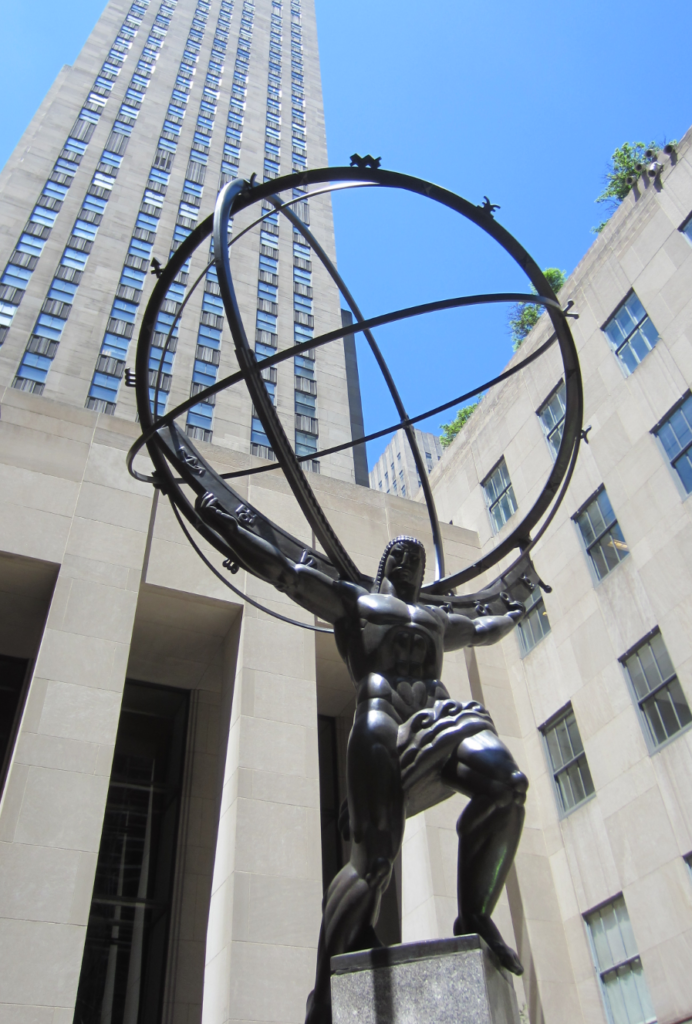
If you enjoy the history of New York City, you may be interested to learn the history of the Russell Sage home at 632 Fifth Avenue, and of the land that it occupied. Before I get into it, I will tell you that today this site is occupied by the Art Deco brass statue of Atlas at Rockefeller Center, directly across from St. Patrick’s Cathedral.

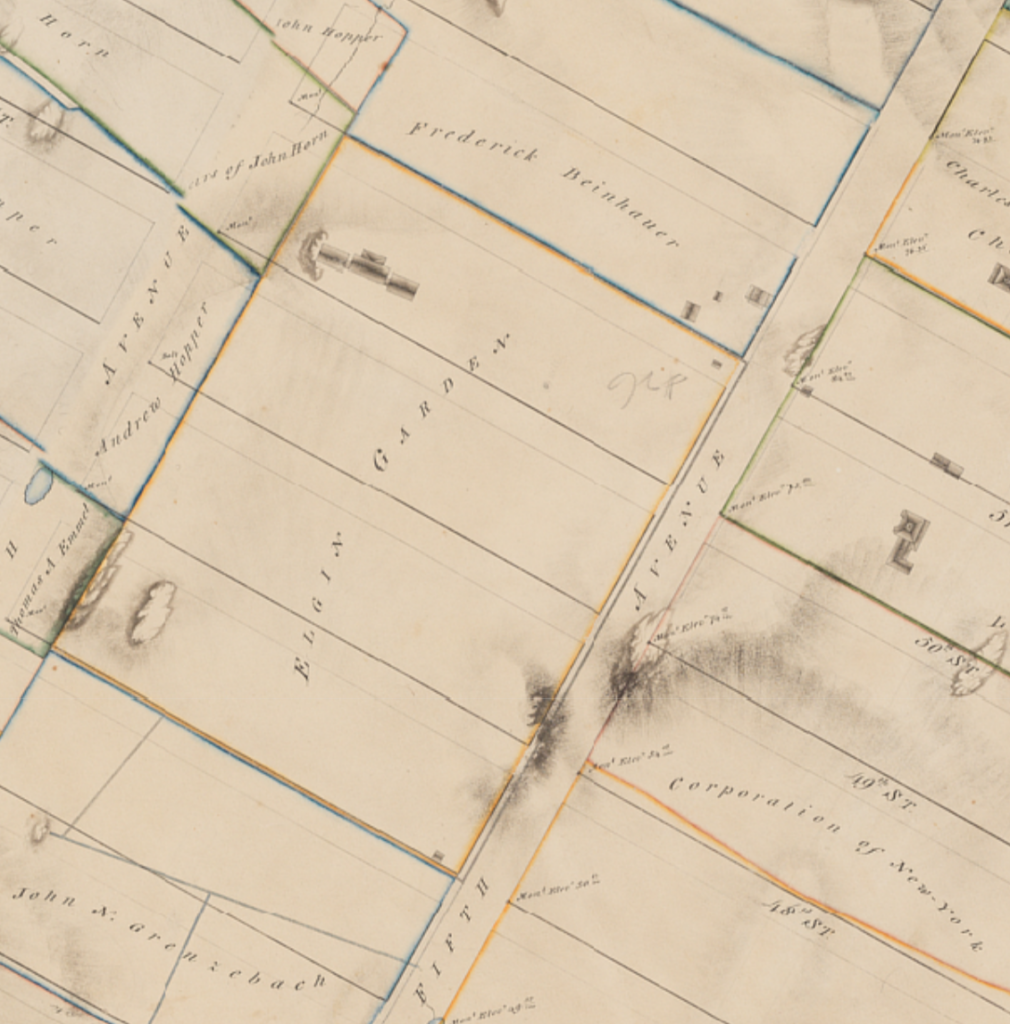
The land now occupied by Rockefeller Center was once the site of the Elgin Botanic Garden, the first botanical garden in New York State. The 20-acre gardens were established in 1801 by Dr. David Hosack, Columbia professor of botany (he was also the doctor who attended to Alexander Hamilton after his fatal duel with Aaron Burr). He purchased the land between Middle Road (Fifth Avenue), Sixth Avenue, 47th Street and 51st Street from the city for $4,807.

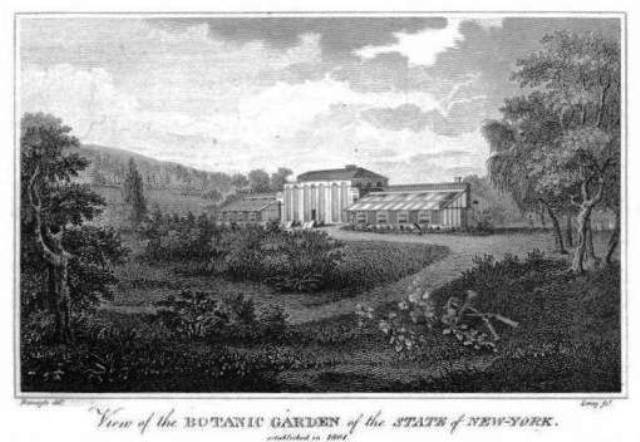
Elgin Botanical Garden

The gardens featured a conservatory for the preservation of green house plants, two hot-houses, and a pond for aquatic species. The whole establishment was surrounded by trees and shrubs and a 7-foot stone wall.

Ten years after they opened, the gardens were turned over to the Regents of the University (now known as SUNY Board of Regents). They were eventually abandoned and fell into decay. Then in 1814, New York State held a lottery to benefit a number of state colleges. Because Columbia was left out of this lottery, its “consolation prize” was this rural and remote midtown land upon which the college could use for its campus.

“Whoop-de-doo,” was the school’s board of trustees’ initial reaction, not realizing that they were sitting on a gold mine that included the garden as well as 260 building lots.

The Elgin Botanical Garden
The Elgin Botanic Garden featured the gardens and greenhouses on about 260 buildable lots in what would become prime Manhattan real estate.

In October 1816, the trustees agreed to officially take possession of the Botanic Garden. Three years later, Governor DeWitt Clinton and the state legislature permitted the college to lease the former gardens, dropping a requirement that it be a future college site. One of the first leaseholders was a gardener named William Shaw, who leased the land for $400 a year for a period of 21 years.

Over the years, Columbia leased the land to several people, including John Ward and Simeon Draper. By the 1890’s, Columbia’s annual income from the property had soared to more than $280,000 annually. Nice consolation prize.

One of the Fifth Avenue lots on Columbia’s land was leased to an eccentric merchant named Charles “Broadway” Rouss, who had worked his way up from poverty to become the owner of a successful chain of retail stores throughout the United States. From the 1870s until 1902, Rouss made his home on this leasehold, in a four-story brownstone across from St. Patrick’s Cathedral.

Russell Sage Reluctantly Moves

When Rouss died in 1902, he sold the home and lease at 632 Fifth Avenue to Mrs. Jeannette P. Goin, who in turn sold it the Sages for $100,000. Russell Sage was reluctant to leave his old home at 506 5th Avenue, where he had lived for almost 50 years, but Margaret Sage was anxious to move 10 blocks north to escape the hustle and bustle of midtown Manhattan.

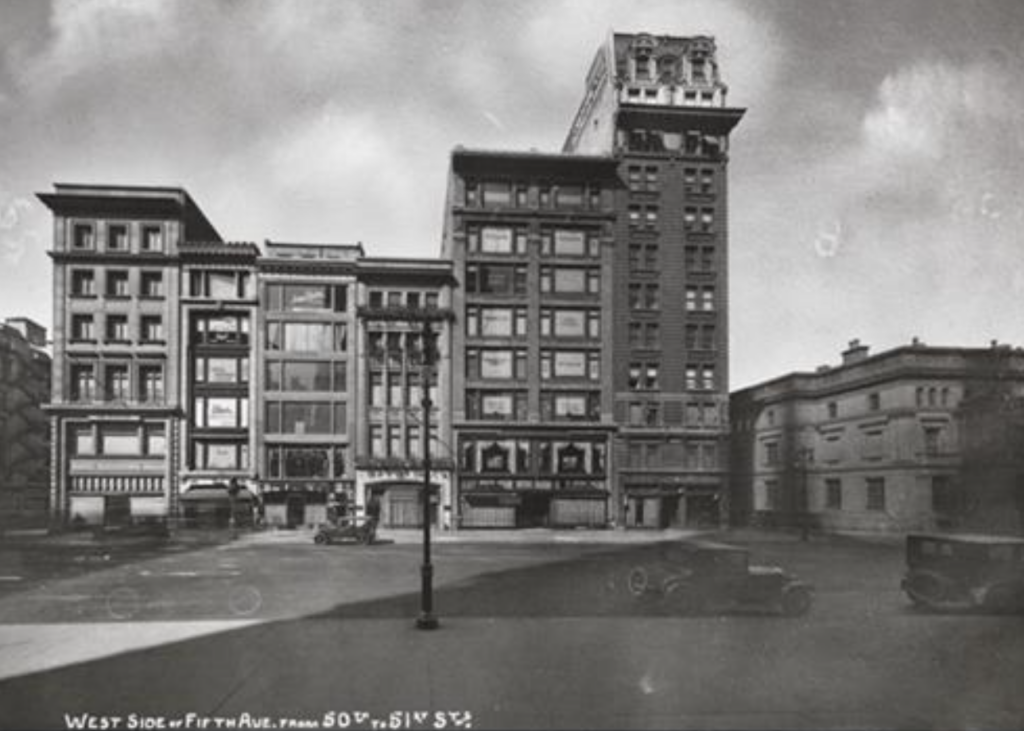
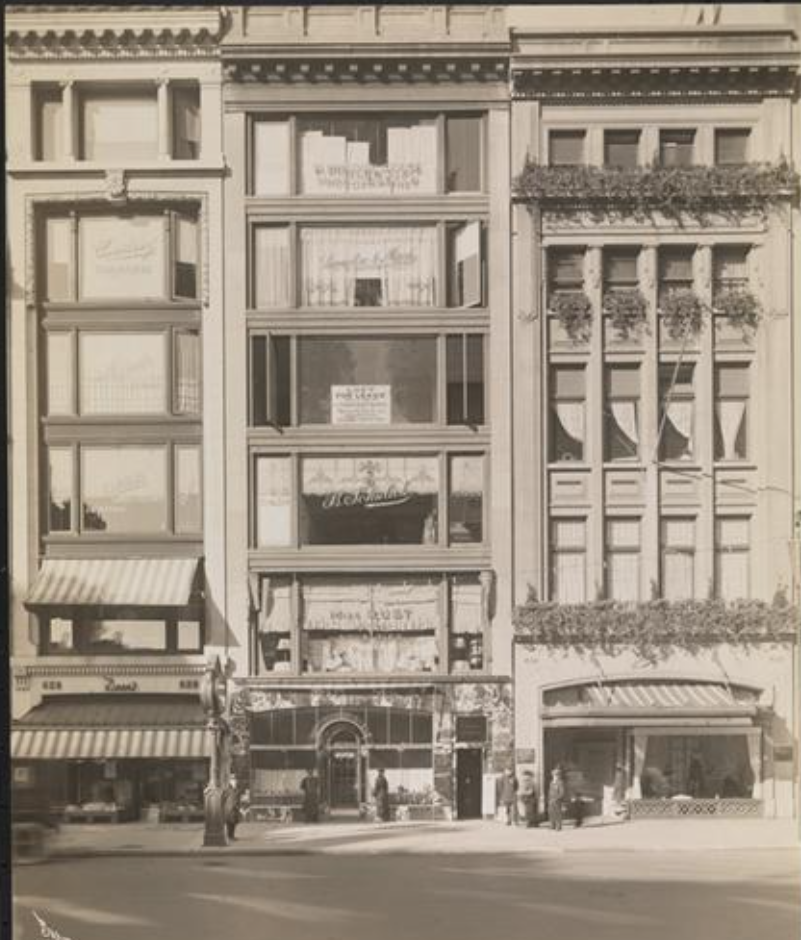
I could not find any photographs of the Sage home during the time that the couple lived there, but below are photos of the building in 1914 and 1920, after the building had been expanded (fifth floor added) and renovated into lofts for commercial use.

Fifth Avenue and 51st Street, 1920
The former Sage home is the smaller building in the middle, behind the street lamp. 1920.
Fifth Avenue and 51st Street, 1914
The former Sage home is on the far right, 1914.

Russell Sage died in his home at the age of 89 on July 22, 1906. He was buried in a steel, burglar-proof vault in the Oakwood Cemetery in Troy, NY.

Atlas, Rockefeller Center

Margaret Sage, who was now one of the wealthiest women in the country, sold the lease to Joseph, Inc., a milliner, in 1909 and moved to the former Draper estate at 604 Fifth Avenue. In her last nine years of life, she used her large inheritance (about $75 million) to found and support numerous educational institutions. She died at the age of 90 and was buried in the vault at Oakwood Cemetery.

By the way, you know that consolation prize? Well, in 1931, the Rockefellers became the largest leaseholder of Columbia’s land. In 1985, Columbia sold the 11.7 acres of land under Rockefeller Center to the Rockefeller Group for $400 million.

The following story of Old New York features a cat stuck in a tree on West 115th Street, two little boys named Kennedy and Abraham Lincoln, a Harlem police cat named Tom Findlay, a hefty police officer, two spiritual leaders named Father Divine and Sweet Daddy Grace, a Harlem cow pasture, the King Towers (NYCHA housing), a 600-pound fruit salad, a war on rats, and an annual baptism by fire hose.

Yep, this one is not your average cat story. And it’s all true.

Our story begins on Saturday, December 12, 1908. This is the day a well-known neighborhood stray cat called Haggerino the Tramp climbed to the top of a 60-foot tree in the back yard of 24 West 115th Street. I’m not sure what possessed the cat to climb so high, but once he reached the top, he was too scared to come back down.

For two days, Haggerino howled from the top of the tree. Real estate salesman Harris Fine and his son, Julius, who lived in the ornate brownstone at 24 West 115th Street, thought it was a burglar at first. Dr. Isaac Davidson at 22 West 115th Street and other nearby neighbors thought it was a rabid raccoon or someone being murdered. Then they looked up and saw the large white cat in the tree.

While some folks went to their roofs and began throwing old shoes and tomato cans at the cat, Dr. Davidson suggested they call the police squad. When Police Officer Coogan of the 104th Street station arrived (as the press noted, Coogan was not a squad, although he did weigh about 300 pounds), he took one look at the cat and refused to climb the tree. He suggested that the residents call the SPCA.   

24 West 115th Street, NYC
The cat was stuck in a tree behind 24 West 115th Street (red X). The building marked “Embassy Mansion” is 20 West 115th Street.

On Monday morning, two days after Haggerino climbed the tree, a 12-year-old boy named Rollo Kennedy put on his badge from the Junior League of the SPCA and told his mom that it was now his responsibility to rescue the cat. He called for his friend, Abraham Lincoln Selig, also a Junior League badge holder, to join him on his mission to relieve the poor cat of its sufferings.

When the boys arrived at the base of the tree, Rollo told his friend about his plan to rescue the cat: they would ask to borrow the Harlem police station cat, Tom Findlay, who would surely protect and serve a fellow feline. Getting permission from the men to take Tom, the boys placed the cat in a basket and carried him to the tree.

Upon hearing and seeing Haggerino in the tree, Tom Findlay also started to howl. His feline sirens encouraged Haggerino to begin his descent from the tree.

But just as the white cat got a few feet from the ground, Tom leaped up and began hissing. Resisting arrest for causing a public nuisance, Haggerino began wrestling his would-be rescuer.

Rollo watched in sorrow as the male cats jumped over a wall and disappeared down the street, knowing he was responsible for losing Tom Findlay, the pride of the Harlem police. (In 1909, the Harlem police had two police cats named Pete and Claude; I do not know if Tom ever found his way back.)

The Remarkable History of 24 West 115th Street

This concludes the cat story, but if you’re curious about the cows, the spiritual leaders, the war on rats, and the baptism by fire hose, continue on…

The location of 24 West 115th Street is noted by the red X on this 
John Randel Map (1818-1820).
The future site of 24 West 115th Street is noted by the red X on this John Randel Map (1818-1820).

The setting of the Harlem cat story took place on the former lands of Adolphus Bussing (b. 1703), a descendent of Arent Harmens Bussing and Susannah Delamater Bussing, who settled in Harlem as part of the Governor Thomas Dongan patent in 1639. Over the course of about 100 years, the Bussing family acquired hundreds of acres of land through purchases and marriages.

Adolphus was the son of Peter Bussing and Rebecca Vermilyea. He had 16 children (3 with his first wife, Maria Myer, and 13 with his second wife, Eva Lubberts), of which only 9 survived into adulthood. When his father died, Adolph received about 200 acres in Harlem, while his two brothers inherited the family property in Fordham Manor.

Lenox Avenue and West 116th Street. 1893
The photo taken in 1893 shows cows grazing on the former lands of Adolph and John Bussing at Lenox Avenue and West 116th Street.

Fast Forward to Father Divine and Daddy Grace

Father M.J. Divine in 1938
Father Divine in 1938

In the summer of 1933, a woman named Lena Brinson was leasing the three-story brick building at 20 West 115th Street, just two buildings east of the cat incident that took place 25 years earlier.

This building had once been called the Embassy Mansion, where banquets and other events took place. Under Lena’s management, the building served as a meeting house, a restaurant, and dormitories, where Lena sold meals for ten and fifteen cents and sleeping accommodations at one or two dollars per week.

Lena was a devout follower of a shady spiritual leader who called himself Father Major Jealous Divine. Father Divine, who was reportedly the son of freed slaves, was a former odd-jobs man named George Baker. He rose to fame among the Black community during the 1930s after founding the International Peace Mission movement.

Much has been written about Father Divine, whom many believe was a cult leader because he convinced thousands of followers that he was God.

In November 1933, Father Divine accepted an invitation from Lena to speak at one of her meetings. To thank him, Lena offered him an office and an apartment on the top floor of 20 West 115th Street. In this way, the large brick building became generally known as Heaven No. 1, or Father Divine’s Peace Mission Headquarters.

Lena became Divine’s top “Angel” and changed her name to Blessed Purin Heart.

20-24 West 115th Street, 1939 NYC tax photo
By 1939, when this NYC tax photo of 20-24 West 115th Street was taken, Father Divine had already moved to the former Eastman Business School at 123rd Street and Lenox Avenue (notice the sign on the middle building).
New York Age, February 26, 1938

Over the next few years, Father Divine expanded his headquarters to include the brownstones at #22 and #24 West 115th Street. He called these two places his extension heavens or other heavens, where women called “Angels” dressed in white; had names such as Golden Star, Peace Love, Morning Star, Faithful Mary, and Saint Mary Bloom; and oversaw dining and dormitory services.

Father Divine was known for promoting communal living. Unfortunately, police were often called to his heavens for reports of assaults, riots, and overcrowded conditions. Following a reported breakup with Faithful Mary, as well as several mysterious fires that heavily damaged his “extension heavens,” the press reported that Father Divine appeared to be in financial trouble.

Bishop Charles Manuel Grace

In June 1938, a West African evangelist named Bishop Marcelino Manoel da Graca (Charles Manuel Grace) took advantage of Divine’s situation by purchasing 20 West 115th Street–assessed at $38,000–for $20,000 in cash.

Bishop Grace (aka Sweet Daddy Grace) thought he could get an even larger following than Father Divine at his United House of Prayer for All People, which he apparently did: It is estimated that Grace founded hundreds of House of Prayers across the United States and overseas and had more than 500,000 parishioners. 

The War on Rats
In 1947, 20 West 115th Street reportedly burned down, forcing Bishop Grace to open a new congregation at 2320 Frederick Douglass Boulevard. That same year, hundreds of tenements between West 112th and 115th Streets were razed, and 2,237 families were evicted to begin excavation for a new housing development called the Stephen Foster Houses. The former “extension heavens” fell victim to this project.

As part of the excavation, crews with the City Housing Authority spread a 600-pound “fruit salad” containing apples, pears, and carrots and a poisonous powder through the cellars of the old tenements on the construction site. A total of 9,000 tenements and warehouses throughout the city were targeted in what the press called a citywide war on rats.

Baptism by Fire Hose
Today the Stephen Foster Houses–renamed the King Towers following Martin Luther King’s death in 1968–take over much of the neighborhood. But the spiritual history of 115th Street continues in the form of an annual baptism by fire hose (Harlem Street Baptism), which started with the United House of Prayer for All People under Bishop Grace.

One can now only wonder if any of these trees in the King Towers complex once held a cat name Haggerino the Tramp captive for two days…

King Towers, Harlem
King Towers, West 115th Street, Harlem

A Christmas Catastrophe by Louis Wain.
A Christmas Catastrophe by Louis Wain. It appears that the “catastrophe” was due to a caged bird (perhaps supper?) escaping from its cage.
Peter the Cat, Louis Wain, 1897

As I write this post, I am anxiously awaiting the arrival of “A Christmas Catastrophe,” one of the popular cat illustrations by the great cat artist Louis William Wain. Of course it is only a reprint, but I still can’t wait to hang it on my wall (and I plan on getting some more Louis Wain reprints in the future).

Louis Wain was not a New Yorker — he was born in 1860 in Clerkenwell, London — but he did live in New York for a few years, so there is a New York City connection to his amazing life story.

In 1884, Louis married Emily Marie Richardson, who had been the governess of his five younger sisters. The couple never had an opportunity to have children, but they did have a pet cat — a stray black-and-white kitten that they rescued after hearing his cries in their yard. This cat, whom they called Peter, would have a profound effect on Louis Wain’s life.

Louis Wain with one of his many feline pets and models.
Louis Wain with one of his many feline pets and models (perhaps this is the brown tabby that he spoke of in the New York Herald in 1909).

Shortly after their marriage, Emily was diagnosed with breast cancer. During her three-year battle, she took great joy in watching Louis sketch pictures of Peter. It was Emily who encouraged her husband to get the drawings published.

And the rest, as they say, is history. Over the next few decades, Louis would go on to complete thousands of cat illustrations (possibly 150,000) for various periodicals and children’s books.

As the writer H. G. Wells said of Wain in a statement read on his behalf for the BBC in 1925, “He has made the cat his own. He invented a cat style, a cat society, a whole cat world. English cats that do not look and live like Louis Wain cats are ashamed of themselves.”

In addition to his popular anthropomorphic cats, Louis Wain also specialized in psychedelic or kaleidoscope cats.
In addition to his popular anthropomorphic cats, Louis Wain also specialized in psychedelic or kaleidoscope cats. He was truly a cat man ahead of his time.

Much has been written about Louis Wain, and hundreds of websites feature his illustrations and books. For my story, I am going to focus on the years he lived in New York, on his memories of Peter, and on his opinions of New York City cats in general.

Louis Wain Moves to New York

In October 1907, Louis moved to New York City to draw New York cats (and work aside the city’s fat cats). Perhaps he was motivated to make this journey to truly follow in the footsteps of John Henry Dolph, who was called “the leading cat painter in America” in 1894.

Upon arrival in the city, he began working for William Randolph Hearst’s newspapers, creating syndicated comic strips such as “Cats About Town” and “Grimalkin.” (Incidentally, Cats About Town is the name of my New York City walking tour company. Great minds think alike…)

Americans welcomed Louis with open paws: the New York press called him “the world’s most famous cat artist” and he was often invited to take part of events hosted by the American Cat Fancy and cat clubs across the country.

Because my stories focus on events in New York City, I wanted to find out where Louis lived while he was in the city. My response from Google’s AI was as follows: “Specific residential addresses for his time in New York are not detailed in the available records.”

Sorry, Google, but you didn’t try hard enough. It took me five minutes to find the answer. According to the 1910 census report, Louis Wain lived in room 15A of the Frederick Hotel at 210 West 56th Street.

The Frederick (formerly called the Sterling Hotel) at 210 West 56th Street was constructed in 1902 on land owned by Charles E. Ellis. The 134-room hotel, which was more of a boarding house, had approximately 50 residents, 7 maids, and 2 hired men in 1910. The proprietor was a widow named Winifred J. Smith.

In 1909, Louis was interviewed by a reporter for the New York Herald. The following is an excerpt from this article:

For the last fourteen years I have painted cats exclusively. When I first took to drawing and painting them they were treated as despised animals, looked on as vermin by sportsmen…The man who would take an interest in the cat movement was looked upon as effeminate. In fifteen years this has greatly changed.

“Peter, a pet cat who lived to be 16 years old, was my inspiration at the start. He was a wonderful black and white and was famous all over England for his cleverness. He didn’t like to pose much, in fact as soon as he saw me get out my sketch book he got sulky and refused to let me draw him. I have known only one cat vain enough to sit for a picture. That was a brown tabby I owned who positively enjoyed it. She would hold a pose for an hour.

A Kittens Christmas, Louis Wain, 1886
A Kittens Christmas, Louis Wain, 1886 Illustrated London News. Emily would die one week after publication of this illustration.

“Peter was very peculiar, not like the ordinary cat with one set expression. He had a face with a sardonic grin and the funniest look in his eyes. I went to the Illustrated London News with a lot of drawings showing Peter standing on his head and doing all sorts of stunts.

“The editor said, ‘but cats don’t grin, they don’t stand on their heads. It’s not art.’ However, the proprietor saw the drawings and at once commissioned me to do a double page for the Christmas number. This was an instant success and I have devoted myself wholly to drawing and painting cats.”

After speaking for some time about Peter, Louis told the reporter how he was able to draw hundreds of varieties of cats:

To most persons all cats look alike. To be sure there are certain characteristics that are the same in all, but there is an endless variety of expressions. If you have noticed, a cat has a round face. It is a series of circles, the cheeks are round, its chops are round, its anatomy is round, there are rings around its neck and its ears are largely round. Working from this point you can secure hundreds of different varieties.”

Louis Wain, The Attack on the Stagecoach

According to Louis, the outlook for cats was better than that of dogs, but Americans still had some work to do to make America great for cats. “I find, however,” he said, “a great love for animals among Americans. It only awaits organized movement.”

Louis continued, “It will require the devotion of women of wealth and social position who will give their time and means to it as the English women have done to bring the cat to this exalted position in America.” (Perhaps he was referring to Caroline Ewen, who met both those requirements.)

Carol Singing, Louis Wain

Louis also shared his opinion about New York cats, and why they were at a disadvantage from their fellow felines who frolicked in fields on the other side of the pond.

“New York cats live in basements. In the homes they are kept below stairs and in the factories, business houses, banks and warehouses they are kept in cellars and only come out of their retreats after dark when they make night hideous by their yowls.

Bringing Home the Yule Log, Louis Wain, 1910

“There is no repose for cats in New York, you see, on account of so much noise, rush, and movement. The weak brain of the cat is not capable of taking it all in and it becomes confused and unmanageable. This makes an underground animal, which has consequently, because of its unnatural environment, grown very uncertain in temper, not to say savage, and as a result the specimens seen about this city are more or less what we call in England ‘strays.'”

Louis Wain with cat
Even in his later years, Louis Wain surrounded himself with cats, both real and illustrated.

Although Louis had only intended to spend a few months in America, he stayed in the city until his mother passed away in 1910, returning to England and assuming his former role as head of the Wain family (human and feline). Louis suffered a stroke in 1938 and passed away nine months later at the age of 78.

In 2021, Amazon Studios released a movie about Louis Wain’s life called The Electrical Life of Louis Wain and starring Benedict Cumberbatch as Louis and Claire Foy as his wife, Emily. I watched it last night for the first time and I must say that the cats who portrayed Peter stole the show! (The film features about 40 different cats, so if you need a cat fix, this movie if for you.)

By the way, the main cat who played Peter in The Electrical Life of Louis Wain is named Felix Wilde, with cats Windsor Wilde and Norbury Ackland playing the younger and kitten versions of Peter, respectively. All three cats were trained by Charlotte Wilde

The Electrical Life of Louis Wain, 2021